
 EN
 English
 русский
 简体中文


Throughput is set by the grinding circuit's weakest link
A ball mill rarely loses tonnage because of one dramatic failure. More often, throughput sits below expectation because feed size, pulp density, ball charge, classifier overflow or maintenance practice has drifted away from the duty point used at commissioning. The mill still turns at the same speed and draws roughly the same power, but every tonne costs more energy.
For a wet grid type ball mill, the useful starting point is the relationship between power draw, circulating load and product size. If the circuit is pushing more tonnes but the classifier returns a large coarse stream, the mill is doing extra work without improving liberation. If the overflow is already fine enough, raising tonnage may simply increase overgrinding and media wear.
Three measurements tell the story quickly: fresh feed tonnes per hour, kWh per tonne of fresh feed, and percent passing the target mesh. When those three move together, the operator can tell whether a change improved the circuit or merely moved the problem downstream.
| Operating lever | What changes | Throughput effect | Energy effect | Practical note |
|---|---|---|---|---|
| Feed size | Top size and size distribution | Coarser feed usually lowers fresh feed t/h | Raises kWh/t if the mill must break more coarse particles | Control crushing and screening before the mill |
| Ball charge | Ball filling, ball size mix, make-up policy | Too low or too high both reduce stable capacity | Oversized balls raise power and wear | Match ball size to the coarsest material to be broken |
| Pulp density | Percent solids and slurry viscosity | Too dilute or too dense both reduce effective grinding | Viscous pulp wastes power on churning | Set density by ore type, not by a single fixed number |
| Classifier setting | Overflow fineness and circulating load | Poor classification sends coarse particles to overflow | Overgrinding and high recirculation increase kWh/t | Check classifier capacity against circulating load |
Ore hardness and feed size: the first cost drivers
Ore hardness, often expressed through Bond work index or plant-specific grinding testwork, sets the energy required to reach a target size. A hard, abrasive ore will usually consume more kWh/t than a soft ore at the same product fineness. The mistake is to compare mills only by shell diameter or motor power. Two mills with the same power can behave very differently when the ore changes.
Feed size distribution matters as much as top size. A circuit fed with a wide spread of coarse and fine particles can stabilize quickly, while a sudden increase in coarse feed raises power per tonne and drops throughput. Pre-screening and controlled crushing reduce that variability. In plants with multiple ore domains, blending should be planned with the mill duty point in mind, not only with the mine plan.
In copper-gold and polymetallic projects, hardness can change by ore domain over short intervals. A mill that performs well on one domain may struggle when harder ore reaches the feed. The practical response is not to chase nameplate capacity but to adjust ball charge, pulp density and classifier set points to hold specific energy within a defined band.
Use the grinding equipment selection guide when comparing mill sizes against ore testwork. A mill with excess power can handle harder ore, but it may run at poor efficiency on softer ore if the ball charge and speed are left unchanged.
Mill speed, filling degree and ball charge
Mill speed is usually expressed as a percentage of critical speed. At low speeds, the media charge tends to slide and cascade; at higher speeds, impact and attrition increase. Most wet grid ball mills run in a range where both impact and abrasion occur, but the best point depends on feed size and product target. A speed that suits coarse feed may not suit a circuit that needs fine liberation.
Filling degree affects power draw and retention time. A charge that is too low gives less grinding action and more liner wear; a charge that is too high can reduce the free path for media and raise power without a proportional gain in throughput. Ball size distribution should match the coarsest particles that must be broken. Large balls handle coarse feed, while smaller balls improve fine grinding.
Worn balls and liners gradually change the charge profile. A mill that was balanced at commissioning may become undercharged or overcharged in practice if make-up ball practice is inconsistent. Daily ball addition records and weekly power draw checks are more useful than occasional visual inspection.
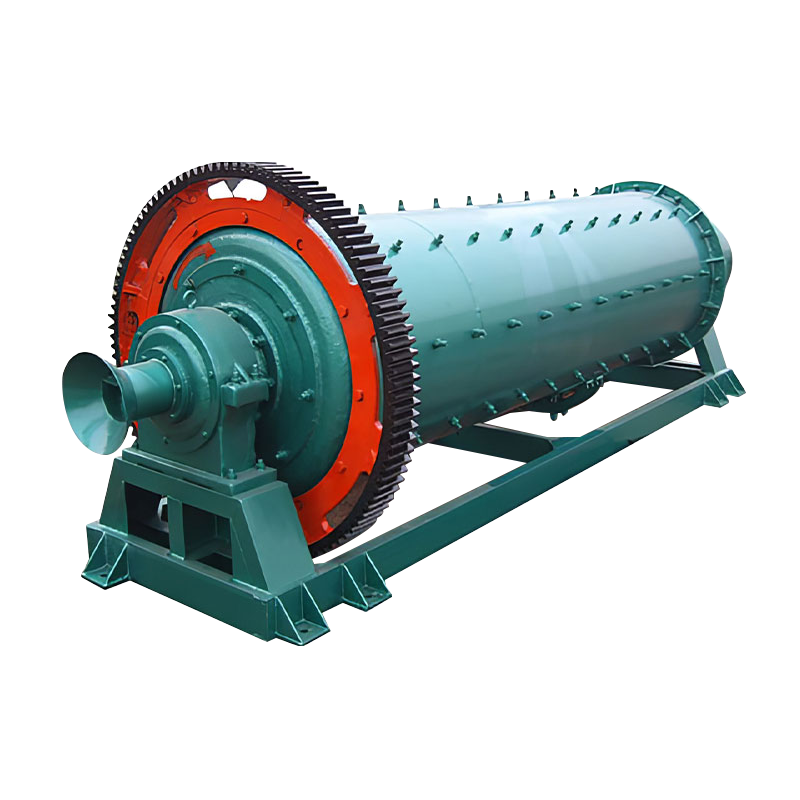 Wet Grid Type Ball MillIts low-slurry discharge speeds qualified material out to reduce over-grinding, helping maintain charge profile and pulp density in grinding circuits.View Product →
Indicative effect of ball charge on stable throughput
Pulp density, viscosity and classifier performance
Pulp density controls how media and particles interact. Too dilute, and particles pass through the mill too quickly; too dense, and the slurry becomes viscous, coating balls and slowing classification. The target is not a single number for every ore. It depends on specific gravity, clay content and the amount of fines already present. A plant that changes ore without changing density set points often sees throughput swing without understanding why.
A spiral classifier or other classification device sets the recirculating load. If the classifier is overloaded, coarse particles report to overflow and fine particles return to the mill. Both outcomes waste energy. The classifier should be sized for the circulating load, not just the fresh feed. Overflow dilution, weir height and spiral speed all influence the cut point.
In plants with variable ore, a slurry mixing tank ahead of the mill or classifier can reduce short-term density swings. Consistent feed density helps the operator hold a stable ball charge and classifier overflow. It also makes trial results easier to trust, because changes in throughput can be linked to the intended adjustment rather than to upstream surges.
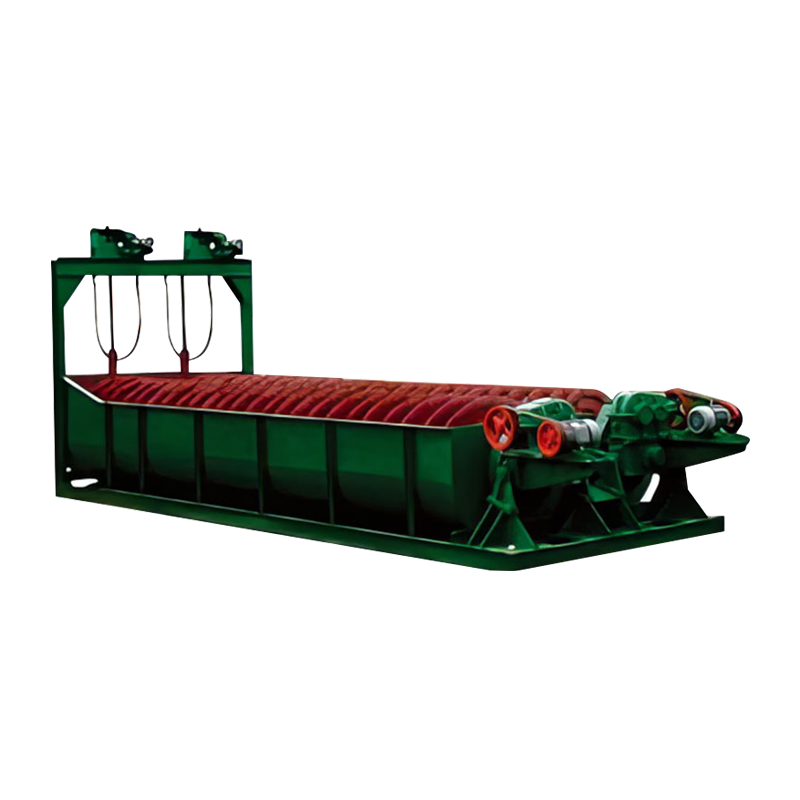 Spiral Classifying Equipment for Closed-Circuit GrindingSingle- or double-spiral classifiers return coarse sand to the mill and support stable classification in closed-circuit grinding.View Product →
 XB Type Slurry Mixing TankStirs slurry before flotation to keep particles suspended and in contact with reagents, helping stabilize feed density ahead of classification.View Product →
Circulating load and product fineness
Circulating load is the ratio of classifier return to fresh feed. A moderate circulating load gives the mill more chances to grind coarse particles. Too low, and the mill may not retain material long enough; too high, and the circuit can become unstable, with pumping and classification equipment overloaded. The right range depends on ore hardness, classifier type and the target grind.
Product fineness should be tied to liberation, not to habit. If the downstream flotation or leaching stage recovers the target mineral at a coarser grind, extra fineness costs energy and may create slimes that hurt recovery. The right target is the coarsest grind that meets recovery and concentrate grade. That target should be reviewed when ore mineralogy changes.
Use a simple test: hold fresh feed and mill speed constant, change one classifier setting, and record overflow fineness, circulating load and kWh/t after the circuit stabilizes. One change per test avoids confusing cause and effect. If the circuit cannot stabilize within a reasonable period, the problem may be feed variation or classifier capacity rather than the mill itself.
Energy use: specific energy, power draw and grinding media
Specific energy is the metric that links throughput to cost. Power draw alone can mislead: a mill drawing high power may be grinding efficiently, or it may be churning a dense pulp with little size reduction. The useful figure is kWh per tonne of fresh feed at a stated product fineness. That number allows a plant to compare one week with another and to compare different operating strategies fairly.
Media consumption is part of energy cost. Oversized balls increase impact but also wear and power draw. Undersized balls may fail to break coarse particles, raising circulating load. A balanced make-up policy keeps the ball charge at the target size distribution. The cheapest ball is not always the lowest-cost choice when wear rate, breakage and mill power are included.
Liner profile also matters. Worn liners change the lift and throw of the charge. A mill may lose throughput before power draw changes enough to attract attention. Liner inspection should be linked to throughput trends, not only to visible wear. A liner change that restores the original charge motion can pay back faster than an increase in ball addition.
Measure fresh feed, not only mill feed
Circulating load can make mill feed look healthy while fresh tonnage falls. Always calculate kWh/t against fresh feed.
Hold one variable at a time
Changing speed, density and ball charge together makes it impossible to know which change helped or hurt.
Watch the classifier overflow
Overflow fineness is the product of the whole circuit, not just the mill. A coarse overflow can signal classifier overload.
Track media wear by size
Ball size distribution drifts slowly. Periodic size checks reveal whether make-up practice is holding the target profile.
Liner design, maintenance and operating discipline
Liners do more than protect the shell. They lift the charge and shape the grinding action. A worn liner can reduce the height of media lift, change the point of impact and increase slip. The result is lower throughput or higher specific energy, often without an obvious alarm. Maintenance planning should compare liner wear against throughput and power trends, not just against calendar intervals.
Grinding circuit discipline shows up in small details: ball addition records, density checks, classifier inspections, pump wear, screen condition and sampling frequency. A plant that samples overflow once per shift may miss short-term excursions that affect downstream recovery. A plant that checks only mill power may miss a rising circulating load that is already limiting throughput.
Operator response also matters. When ore hardness increases, the easiest response is often to add balls or raise density. That can help temporarily, but it can also overload the classifier or increase wear. A written response plan for hard ore, wet ore and fine ore keeps the circuit within a stable range instead of reacting after the overflow changes.
What to specify when buying a wet grid ball mill
Buyers should specify the duty, not just the equipment model. The useful information includes design fresh feed t/h, ore bulk density, Bond work index range, feed size distribution, target product fineness, expected circulating load, available power and the classification method. A mill selected only by shell diameter may be oversized for one ore and undersized for the next.
The specification should also define the operating window. What is the minimum stable throughput? What product size must be held at that throughput? What power draw is expected at the design point? What ball charge and speed range should be used? These details make commissioning and later optimization much easier.
| Check | Target or indicator | Why it matters |
|---|---|---|
| Feed size distribution | Stable top size and controlled fines | Feed variation can hide the effect of the trial change |
| Ball charge and ball size mix | Within the selected operating range | Charge condition affects power draw and grinding action |
| Pulp density | Consistent percent solids for the ore type | Density changes alter viscosity and classification |
| Classifier overflow | Target percent passing the control mesh | Product fineness links grinding to downstream recovery |
| Circulating load | Stable and within equipment capacity | Excess recirculation can overload pumps and classifiers |
| Specific energy | kWh/t at the stated product fineness | Shows whether throughput gains are real or costly |
A practical throughput and energy checklist
A useful trial starts with a stable baseline. Run the circuit at current settings long enough to collect fresh feed, power draw, overflow fineness, circulating load and density. Then change one operating lever and repeat. The goal is not to find a single perfect number, but to understand how the circuit responds when ore or product demand changes.
- Record fresh feed t/h and mill power at the same time.
- Calculate kWh/t against fresh feed, not total mill feed.
- Check classifier overflow fineness at each test point.
- Inspect ball charge and liner condition before changing speed.
- Hold pulp density stable during the first round of tests.
- Compare results by ore domain, not by a single monthly average.
Project experience helps set realistic expectations. In a copper-gold pyrite project, for example, hardness and sulphide content can change the balance between throughput and target grind. The operating team needs a response plan that covers those changes without pushing the classifier beyond its capacity.
For circuit design, the mill, classifier, slurry mixing and feed system should be treated as one unit. A strong mill with a weak classifier will not deliver stable throughput. A well-sized classifier with inconsistent feed density will also struggle. The most reliable gains usually come from reducing variability first, then tightening the operating point.
FAQ: Ball mill throughput and energy questions
What is the most common cause of low ball mill throughput?
Feed size variation and poor classification are common causes. Coarse feed raises the grinding load, while an overloaded classifier returns fine material and sends coarse particles to overflow. Both make the mill work harder without delivering a stable product.
Should I increase ball charge to raise throughput?
Only within the mill's designed range. A higher charge can raise power draw and improve grinding for a short period, but it can also reduce the free path for media and overload the classifier. Check specific energy and overflow fineness before and after the change.
How does pulp density affect energy use?
Too dilute, and particles pass through too quickly. Too dense, and the slurry becomes viscous, which wastes power on churning and slows classification. The best density depends on ore specific gravity, fines content and classifier performance.
What product fineness should a ball mill target?
Target the coarsest grind that still meets downstream recovery and concentrate grade. Extra fineness costs energy and can create slimes that reduce recovery. The target should be reviewed when ore mineralogy changes.
How often should ball size distribution be checked?
Check it regularly enough to catch drift in make-up ball practice. A monthly or quarterly check may be suitable for a stable circuit, while variable ore or high wear rates may need more frequent checks. Pair the check with power draw and throughput trends.


