
 EN
 English
 русский
 简体中文


Start with the locked flow sheet, not the cell volume
The cell size for a given capacity cannot be read from a single tonnage number. It comes from a locked flow sheet: dry solids feed, feed grade, target concentrate grade, pulp density, reagent scheme, ore specific gravity, liberation size, and the number of roughing, scavenging, and cleaning stages. If any of those inputs are still moving, the flotation cell volume is only a placeholder. A plant rated at 1,000 t/d can need very different cell volumes when the ore becomes finer, the pulp becomes denser, or the cleaner circuit requires more retention time.
A reliable first estimate starts with working volume, not catalogue volume. Use the volumetric pulp flow and the required retention time to calculate the total working volume, then divide by the effective working volume of one cell. The basic relationship is simple: working volume in cubic meters equals pulp flow in cubic meters per hour multiplied by retention time in minutes, divided by 60. After that, add a design margin and check the result against the bank layout, froth area, and agitation power. The arithmetic is easy; the judgement is in the inputs.
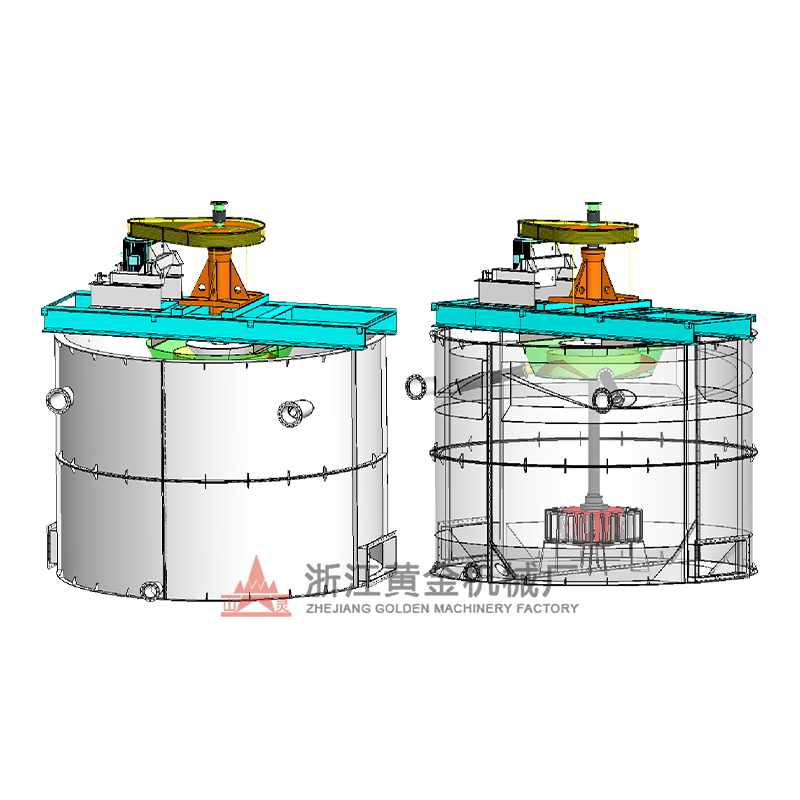 Large Flotation Machines for High-Capacity Ore DressingReview this large flotation machine range when sizing cell volume from pulp flow and retention time, with models up to 200 m³.View Product →
Convert the capacity into volumetric pulp flow
Most capacity discussions begin in dry tonnes per hour, while flotation cells are sized in cubic meters of pulp. The conversion must include solids specific gravity and the mass percent of solids. For a 100 t/h dry feed at 35% solids and an ore specific gravity of 2.7, the solids volume is about 37 m3/h and the water volume is about 186 m3/h, giving roughly 223 m3/h of pulp. That number, not the dry tonnage alone, drives the cell volume calculation. If the same plant runs at 45% solids, the pulp volume falls and the cell count can change.
Use a design margin that reflects real operating drift. A 10% to 20% margin is common for feed rate variation, temporary grade changes, and reagent upsets, but the margin should be stated in the purchase specification. Do not hide the margin inside a vague “vendor guarantee.” Ask for the calculation basis in writing: design tonnes per hour, solids by mass, ore specific gravity, pulp temperature, and the assumed retention time for each flotation stage.
| Input | Typical unit | Why it changes cell volume |
|---|---|---|
| Dry solids feed | t/h | Sets the mass balance and the pulp flow |
| Solids by mass | % | Changes pulp volume and residence time |
| Ore specific gravity | dimensionless | Converts dry tonnes into solids volume |
| Design margin | % | Covers feed rate and grade variation |
| Stage retention time | minutes | Converts pulp flow into working volume |
Retention time is a range, not a single number
Retention time is one of the most misused numbers in flotation sizing. A rougher bank may need 5 to 12 minutes for a fast-floating sulphide, while a scavenger treating slow-floating values may need 10 to 20 minutes or more. Cleaners often sit between 8 and 20 minutes depending on liberation and entrainment control. These are planning ranges, not guarantees. The correct value comes from batch tests, locked-cycle tests, pilot runs, or comparable plant data with the same ore type and reagent scheme.
The stage duty matters more than the average. Roughing needs enough volume to recover the bulk of the valuable mineral and leave the scavenger a realistic feed. Scavenging needs volume and residence time for slow kinetics, but it also needs sufficient agitation to keep coarse particles in suspension. Cleaning needs selective froth handling and often a longer retention time per stage, yet too much cleaner volume can increase entrainment and circulate unstable froth. Size each stage separately, then check the bank as a whole.
Longer retention time cannot compensate for poor liberation. If the target mineral is locked in composite particles, additional cell volume mainly increases circulation and operating cost. A grind-size check, mineralogical review, and reagent review should come before a cell-count increase. When the ore is already liberated, a modest volume increase in the scavenger or cleaner may recover value quickly; that is why sizing must be tied to testwork rather than a generic table.
Select the cell type before you fix the count
Mechanical flotation cells, pneumatic cells, and different rotor-stator designs do not have the same effective volume, froth area, or power profile. A mechanical cell with a deep tank and a strong rotor may suit coarse or high-density pulp, while a self-aerated or forced-air design may suit finer feeds and more controlled froth. The cell type affects the number of units because the effective working volume and the practical bank arrangement change with the design. Do not compare nominal tank volumes across different cell types without correcting for working volume and froth allowance.
For pre-engineering, compare the cell type against the duty: feed particle size, solids specific gravity, required air rate, froth stability, and expected wear. A bank of smaller cells offers more operational flexibility and better residence time distribution, but it needs more piping, drives, and maintenance points. A smaller number of large cells reduces footprint and instrumentation, yet it can be less tolerant of feed upsets and may need a higher design margin. For a side-by-side view of mechanical designs, the BF versus XCF/KYF comparison is useful during pre-engineering.
Ask for the effective volume, froth area, rotor speed range, air supply, and installed power for each candidate. Then check whether the proposed unit can actually be maintained at the site. A large cell that cannot be lifted, inspected, or re-lined within the shutdown window is not a good choice even if its capital cost looks attractive.
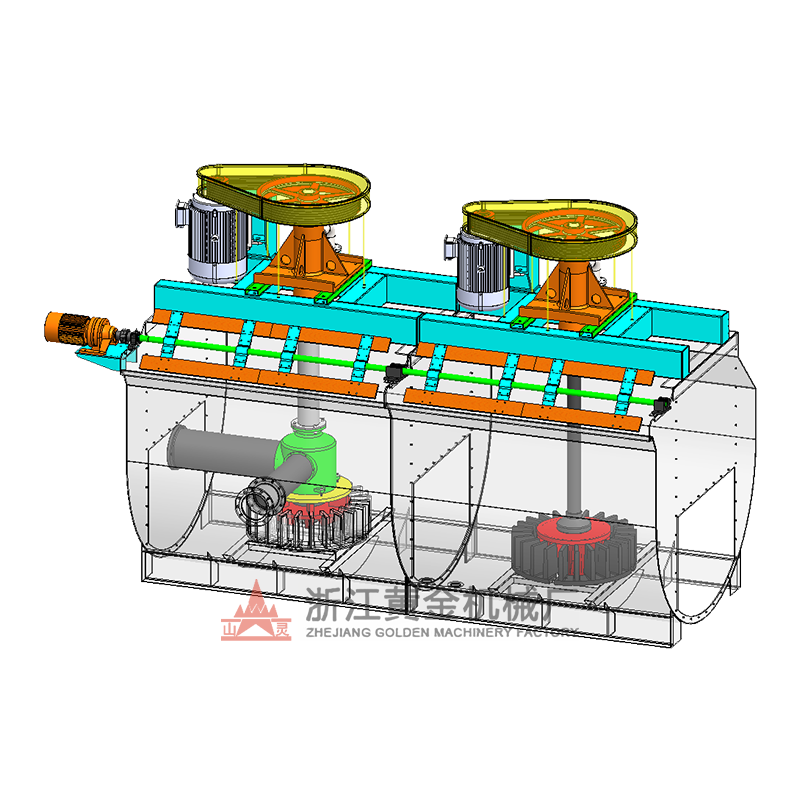 XCF/KYF Flotation Machines with Effective Volumes to 320 m³Review XCFII/KYFII flotation machines for combined suction and direct-current tank arrangement, effective volumes from 1 to 320 m³, and maintenance access before selection.View Product →
Match tank volume to working volume, not nominal volume
A flotation cell is rarely full to the overflow lip. Froth depth, freeboard, aeration, and internal structures reduce the volume available for pulp residence. Depending on the design and duty, the working volume may be 60% to 85% of the nominal geometric volume. A 30 m3 nominal cell at 75% working volume provides about 22.5 m3 of pulp volume. If the sizing calculation requires 25 m3 per cell, that unit is undersized even though the catalogue says 30 m3.
This is a common procurement risk. Two suppliers can quote the same nominal volume but different working volumes, different froth areas, and different power draw. The purchase specification should require the working volume at the specified froth depth and the corresponding residence time. It should also state whether the quoted volume includes the feed box, discharge box, or any external launder volume. Those details change the real retention time and the number of cells needed.
Check the tank height against the building, the maintenance platform, and the crane. A taller cell may reduce footprint, but it can increase foundation load and make rotor replacement more difficult. In an existing plant, the available headroom often decides the cell size before the process calculation does. That constraint should be stated early so the process design does not converge on a unit that cannot be installed.
Use capacity and bank layout to choose unit size
Once the total working volume is known, divide it into a practical bank. A bank of three to six cells is common in many circuits because it provides reasonable residence time distribution without excessive piping. However, the number of cells should come from the duty and the plant layout, not from a fixed rule. For 200 m3/h of pulp and 10 minutes of retention, the total working volume is about 33 m3. That could be four cells of roughly 8.5 m3 working volume each, or three cells of about 11 m3 each, provided the effective volumes and froth areas are acceptable.
Smaller cells can improve plug-flow behaviour and give operators more control over froth depth and air rate. Larger cells reduce the number of drives, launder runs, and instrumentation points. The trade-off is usually maintenance access and upset tolerance. If the ore changes frequently, a bank with more flexibility may be worth the extra capital. If the feed is stable and the plant has a strong maintenance team, a compact bank of larger cells can be the lower-cost choice over the full life cycle.
Check the bank layout for short-circuiting. Feed should enter the first cell in a way that distributes pulp across the tank and avoids direct flow to the discharge. Tailings should leave from the opposite end of the bank, and froth should report to a launder that does not interfere with the next cell. A good cell design can fail in service if the bank layout creates dead zones or bypass flow.
Check aeration, impeller, and power per cubic meter
Cell volume alone does not guarantee flotation. The rotor and stator must disperse air into fine bubbles, keep solids in suspension, and generate the pulp circulation needed for particle-bubble collision. Power per cubic meter is a useful comparison, but it must be tied to the duty. A coarse, high-density pulp may need more power for suspension, while a fine feed may need more froth area and gentler circulation. Ask for the installed power, operating power, rotor tip speed, and air rate range for each candidate.
Do not accept a single “air blower included” statement. The air supply must match the cell’s design air rate and the required bubble size. For forced-air cells, confirm the blower capacity, control valve, and instrumentation. For self-aerated cells, confirm the rotor speed range and the effect of pulp density on air induction. If the cell is expected to operate at low air rates during cleaning, check that the rotor still produces stable dispersion and does not sand out.
| Check | What to request | Why it matters |
|---|---|---|
| Installed power | kW per cell and kW per m3 | Indicates suspension and air dispersion capability |
| Rotor tip speed | m/s at normal and maximum speed | Affects wear, bubble size, and particle suspension |
| Air rate | m3/min per cell and control range | Controls froth stability and recovery |
| Froth area | m2 per cell and lip length | Limits concentrate capacity and froth crowding |
| Working volume | m3 at stated froth depth | Determines actual residence time |
Account for ore density, particle size, and residence time distribution
High specific gravity increases the mass of solids in the cell and the power needed to keep them suspended. It does not always require more volume, but it often requires a stronger mechanical design, more wear protection, and a higher installed power. A cell selected only on volume may sand out when the feed becomes coarse or dense. Check the settling velocity of the largest particles and the minimum circulation velocity in the tank. If the design cannot keep the coarse fraction moving, the effective residence time falls and recovery suffers.
Particle size also changes the required froth area. Coarse particles need strong agitation and may detach from bubbles in turbulent zones. Fine particles need more collision opportunities and stable froth, but they can also increase entrainment. A bank that works for a fine polymetallic ore may not work for a coarse gold or copper feed. The practical answer is to size the cell around the particle size distribution, not only the average grade.
Residence time distribution is another hidden variable. A single large cell behaves differently from a bank of smaller cells. Tracer tests or computational modelling can show dead zones, bypassing, and short-circuiting. If the plant expects high recovery at a variable feed rate, the bank should be arranged to provide a predictable plug-flow pattern. The cell count and the internal design both affect that pattern, so they should be reviewed together.
Plan for froth handling and launder capacity
Flotation capacity is not only pulp volume. The froth phase must be able to discharge the concentrate at the target grade and tonnage. Froth area, lip length, launder slope, and froth crowd boards all influence whether the cell can handle the expected froth volume. A cell with enough pulp volume but too little froth area will suffer froth crowding, unstable overflow, and poor grade control. This is especially important in cleaner and recleaner stages where the froth is selective but relatively small in volume.
Ask for the froth area per unit volume and the launder capacity at the design concentrate rate. Check the launder slope and the distance to the concentrate box. Long, flat launders can deposit solids or create unstable flow. If wash water is used, confirm the water distribution and the effect on froth stability. For a new plant, the launder layout should be reviewed with the cell arrangement, not added after the cells are selected.
Height is another practical limit. A tall cell may fit the process calculation but not the building. The operator needs access to the froth zone, the launder, and the drive assembly. Maintenance platforms, handrails, and lifting beams should be included in the layout. A cell that is difficult to inspect will be run blind, and that usually leads to poor recovery before it leads to a mechanical failure.
Confirm wear parts, maintenance access, and spares before purchase
The lowest capital cost cell is not necessarily the lowest cost over ten years. Rotor and stator wear, bearing replacement, seal maintenance, and liner life all depend on the duty and the materials selected. A high-density or abrasive pulp can wear a standard rotor quickly. Ask for the expected wear life, the recommended spare parts list, and the change-out procedure. The spare parts should be available locally or through a clear supply plan, because a long lead time on a rotor can stop the whole bank.
Maintenance access should be checked at the design stage. Can the rotor be removed with the available crane? Is there enough space to pull the shaft? Are manholes large enough for inspection? Can the launder be cleaned without entering a confined space? These questions are easier to solve before the foundation is poured. In an existing plant, they may decide whether a large cell is practical at all.
Include a critical spares package in the purchase specification: one rotor, one stator, bearing set, seal set, and the recommended wear liners. For a new bank, the package should cover the first year of operation. For a retrofit, it should match the shutdown schedule. The cost of these parts is small compared with the cost of an unplanned stop, and it forces the supplier to state the wear assumptions clearly.
Use pilot or plant data to correct the first estimate
Every first-pass sizing calculation should be corrected with data. Batch flotation tests can establish the kinetics and the reagent scheme. Locked-cycle tests can show the circulating load and the cleaner performance. Pilot runs can reveal the effect of cell type, air rate, and froth depth. If pilot data are not available, use comparable plant data from the same ore type and similar grind. The key is to compare the same basis: feed grade, target grade, solids density, and stage recovery.
Scale-up should account for residence time distribution, air dispersion, and froth transport. A laboratory cell and a production cell do not have the same mixing pattern. The scale-up factor should be stated by the supplier or the test laboratory, not assumed. If the first estimate gives 30 m3 of working volume and the pilot data suggest 20% more retention time, the design should move to 36 m3 before the cell count is fixed. That is cheaper than adding a cell after commissioning.
The 3,000 t/d zinc flotation upgrade shows why plant data matter. A retrofit must work within existing buildings, launder runs, and shutdown windows. The process calculation may point to a larger cell, but the practical answer may be a different bank arrangement with a higher effective volume. Review the case against the site constraints, not only the tonnage.
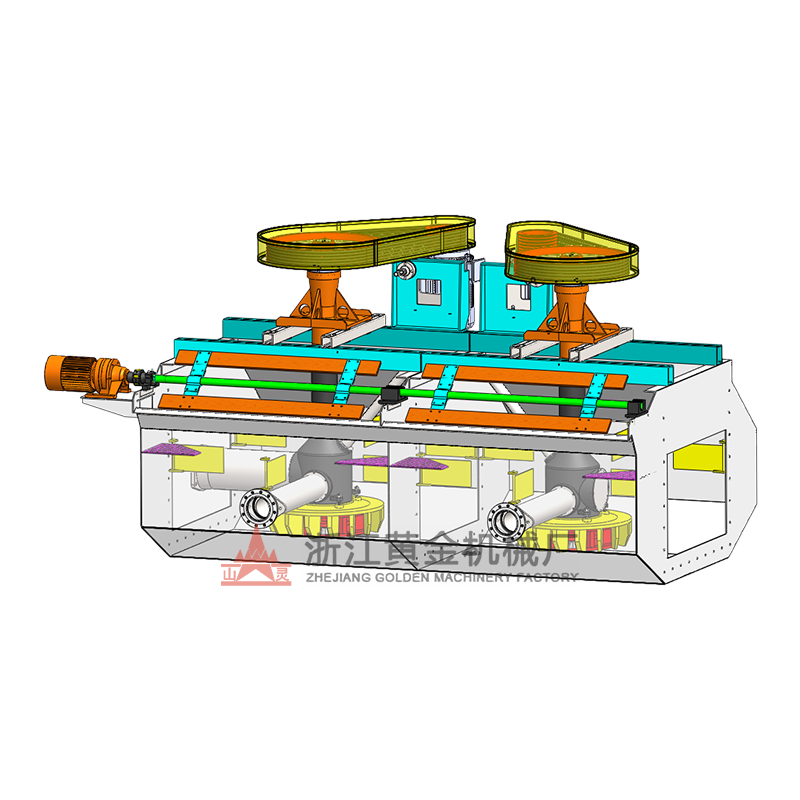 BF Self-Aspirated Flotation Machines for Compact Flotation BanksConsider BF self-aspirated flotation machines for layouts needing integrated air and slurry suction, with tank volumes from 0.15 to 24 m³.View Product →
Compare capital and operating cost over the bank, not one cell
Cell price is only one line in the budget. The bank includes foundations, platforms, piping, valves, launders, drives, instruments, blowers, and electrical work. A larger cell may reduce the number of units but increase the foundation load, crane requirement, and rotor weight. A smaller cell bank may cost more in piping and maintenance points but reduce the risk of a single large unit stopping the whole circuit. Compare the complete installed cost, not the ex-works price.
Operating cost should include power, wear parts, reagent consumption, and downtime. Power per cubic meter is a useful indicator, but it must be measured at the expected air rate and pulp density. Wear cost depends on the abrasive content and the rotor-stator design. A cell that uses more power but achieves a stable froth and lower circulating load may be cheaper overall. A cell that saves power but sands out or loses recovery is not a saving.
Use a simple life-cycle comparison: installed capital, annual power, annual wear parts, expected availability, and recovery value. If the ore body is expected to change, add a sensitivity case for finer grind and higher tonnage. The selected cell size should still work at the upper end of that range without a major rebuild. That is the practical meaning of a robust design.
Build a sizing checklist and purchase specification
A clear checklist prevents the common mistake of buying a cell that fits the catalogue but not the circuit. The process team should confirm the design basis, the stage retention times, and the expected feed variation. The mechanical team should confirm the working volume, froth area, power, and maintenance access. The procurement team should confirm the spare parts, documentation, and acceptance tests. All three views should be in one specification.
- Design feed rate in dry tonnes per hour, with normal and maximum values.
- Solids by mass, ore specific gravity, and pulp temperature range.
- Particle size distribution and target liberation size.
- Retention time for rougher, scavenger, and cleaner stages.
- Required working volume and froth area per cell.
- Installed power, rotor speed, and air rate range.
- Launder layout, froth depth, and concentrate capacity.
- Wear parts list, critical spares, and delivery schedule.
The purchase specification should also state the acceptance tests. For a new cell, check the working volume at the design froth depth, the air rate, the power draw, and the rotor speed. For a bank, check the residence time distribution and the ability to control froth depth at each cell. If the supplier cannot provide these values, the proposal is incomplete. A clear test plan protects both sides and reduces the risk of a costly commissioning surprise.
- Lock the flow sheet and the design basis.
- Calculate pulp flow and total working volume.
- Select the cell type and check the effective volume.
- Divide the volume into a practical bank.
- Verify power, air, froth area, and maintenance access.
- Correct the estimate with testwork or plant data.
- Compare installed cost and life-cycle cost.
FAQ: flotation cell sizing questions buyers ask
Can I size a flotation cell from tonnes per day alone?
No. Tonnes per day must be converted to pulp volume using solids by mass and ore specific gravity. The stage retention time and the effective working volume then determine the cell size. Two plants with the same daily tonnage can need different cells if their pulp density or cleaner duty is different.
How many cells should be in one bank?
Three to six cells is common, but the number should follow the duty and the layout. More cells can improve residence time distribution and operational flexibility. Fewer, larger cells can reduce piping and instrumentation. Check the bank for short-circuiting and confirm that each cell has enough froth area for its duty.
What working volume should I use for a 100 m3 cell?
It depends on the design and froth depth. A working volume of 60% to 85% of nominal is a reasonable planning range. Ask the supplier for the working volume at the specified froth depth, and use that value in the residence time calculation. Do not use the nominal volume as if it were all pulp.
Is a larger cell always more efficient?
Not always. A larger cell can reduce the number of units and the footprint, but it may also reduce flexibility and increase the impact of a single failure. It can be harder to maintain and may not suit a variable feed. The right size is the one that meets the process duty and can be maintained at the site.
When should I add a design margin?
Add a margin for feed rate variation, grade changes, and reagent upsets. A 10% to 20% margin is common, but the correct value depends on the ore body and the plant operating strategy. State the margin in the specification so the supplier and the owner are using the same basis.
What data should I request from the supplier?
Request the effective working volume, froth area, installed power, rotor speed, air rate range, launder capacity, wear parts list, and maintenance procedure. Also request the calculation basis for residence time and the recommended spares. A complete proposal should show how the cell size was derived, not only the model number.



