
 EN
EN
 English
 русский
 简体中文
简体中文

Two trucks leave the gate of a copper mine on the same morning. The first carries 40 tonnes of run-of-mine ore that assays roughly 0.5% copper. The second carries about 2 tonnes of dark, damp, finely ground copper concentrate that assays 26% copper. The first load is tipped onto the stockpile to wait for processing; the second goes straight into a sealed container and begins its trip to a smelter. Everything that separates those two loads is the business of ore dressing, and the second load itself is what the industry calls a mineral concentrate.
The short answer: a mineral concentrate is the enriched product of mineral processing — a small, dense fraction of the mined material in which valuable minerals have been separated from waste rock and upgraded to a grade that smelters and chemical plants will pay for. It sits between the mine and the smelter: not raw ore, not refined metal, but an intermediate product with its own price formulas, quality specifications, sampling rules and transport regulations.
Four facts that define every concentrate
- It is produced after mining: ore must be crushed and ground until the valuable minerals are physically released from the surrounding rock.
- It is a small mass fraction: a typical flotation circuit pulls only 2-15% of the feed mass into the concentrate stream.
- It is judged by two numbers, grade and recovery: how rich the concentrate is, and how much of the contained metal it actually captured.
- It is shipped wet and tightly controlled: moisture limits and liquefaction rules govern how concentrates travel, especially by sea.
What Exactly Is a Mineral Concentrate?
An ore concentrate — also called dressed ore — is the product of ore dressing operations, the stage of mining in which valuable metal-bearing minerals are separated from waste rock before any smelting or chemical extraction takes place. The raw ore is ground finely in milling equipment, then passed through separation machinery that selects the particles carrying the valuable mineral. What leaves the plant as concentrate is usually a fine powder or thick slurry — black, grey, green or buff depending on the mineral — with a metal content many times higher than the ore it came from.
Numbers make the idea concrete. If a copper ore contains 0.5% copper and the plant delivers a 25% copper concentrate, the copper content has been upgraded fifty-fold. Nothing has been extracted chemically and no new metal has been created. The plant has simply gathered the small share of particles rich in chalcopyrite and other copper minerals, and rejected everything else as tailings. Concentration is physical sorting, done at enormous scale and within tight tolerances.
The word also appears in a second setting worth distinguishing. In exploration, "heavy mineral concentrates" are produced in the field by panning or tabling stream sediments, so that a few grains of indicator minerals can be studied under a microscope to trace a deposit back to its source. The principle is the same — physical upgrading — but the purpose and the scale are entirely different. This article is about plant concentrates: the bulk product that mines sell and downstream plants buy, move by the shipload and inspect by the container.
Grade
The assayed content of the valuable metal or mineral, expressed in percent for most metals and fertilizer minerals, or in grams per tonne for precious metals. Grade anchors the price formula.
Recovery
The share of the valuable metal contained in the plant feed that reports to the concentrate. A plant recovering 90% of the copper is quietly giving away the other 10% to tailings.
Mass pull
The share of feed mass that becomes concentrate. High recovery at low mass pull is the ideal every circuit designer chases, because it means less material handled downstream.
Gangue
The commercially worthless material — quartz, calcite, feldspar and other silicates — that hosts and dilutes the ore minerals and must be rejected before the product can be sold.
From Run-of-Mine Ore to Shippable Concentrate: The Three-Stage Chain
Every concentrator, whether it treats 500 tonnes or 30,000 tonnes of ore per day, runs on the same logic: liberate the minerals, separate them, then dewater the result. The machines differ with the mineral being won, but the sequence almost never changes.
Crushing reduces run-of-mine ore to pieces a few centimetres across.
Grinding mills the ore with water and steel media until minerals are liberated.
Separation equipment selects the valuable particles and rejects gangue.
Cleaning stages re-treat the rough concentrate to push the grade higher.
Thickening and filtration cut the water content to the shipping limit.
Liberation: why grinding always comes first
A valuable mineral can only be recovered if it first exists as an individual particle. In as-mined ore, chalcopyrite grains might be a fraction of a millimetre across, locked inside quartz or carbonate. Crushing breaks the rock into manageable pieces; grinding finishes the job, tumbling the ore in a mill with steel balls until the bonds between mineral and gangue are physically cut. Under-grind, and the separation machines receive composite particles they cannot sort cleanly, so metal leaks into tailings. Over-grind, and you manufacture ultrafine slimes that report wrongly to the froth and dilute the product. The target grind — often quoted as "80% passing 75 microns" for many base metal ores — is one of the most consequential numbers in the plant, and it is fixed by laboratory test work, not by analogy with the mine next door.
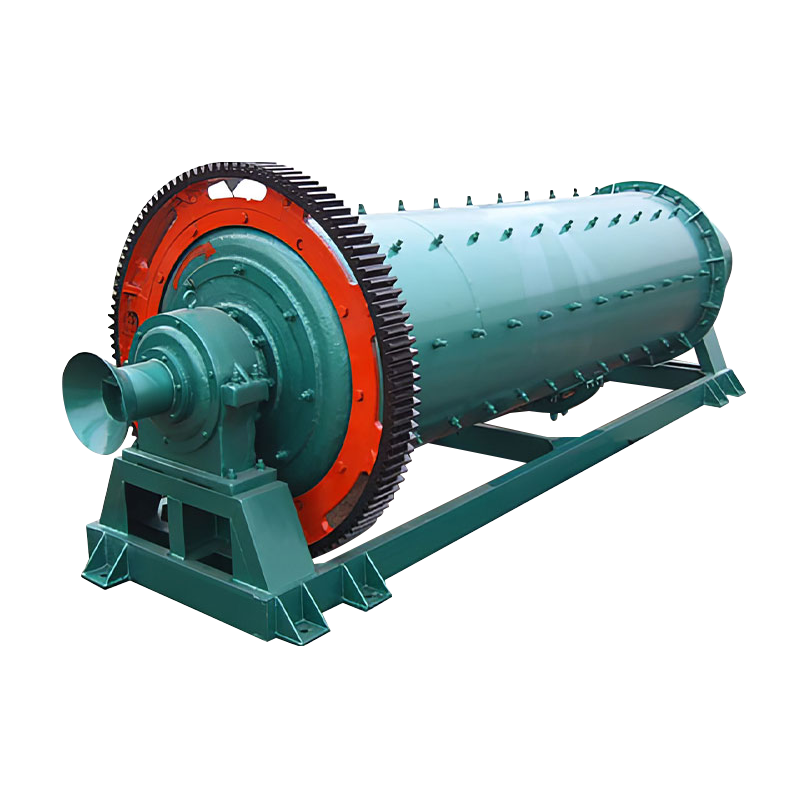 Wet Grid Type Ball MillThe wet grate ball mill is composed of the feeding part, discharging part, rotating part, transmission part (reducer, small transmission gear, motor, electronic contro...View Product →
Separation: flotation first, with gravity and magnetics in support
Froth flotation is the workhorse of concentration for base metals, lithium minerals and phosphate rock. The ground pulp is conditioned with carefully dosed reagents, then agitated in flotation machines that disperse air as millions of fine bubbles. Collector chemicals render the valuable mineral surfaces water-repellent, so those particles attach to bubbles and ride the froth over the cell lip as concentrate, while water-loving gangue sinks and reports to tailings. In complex ores, sequential circuits peel minerals apart one from another: lead away from zinc, copper away from molybdenum, sphalerite away from pyrite. Where density differences are strong — iron ores, tin, tungsten — gravity concentration may lead the flowsheet; where minerals respond to a magnetic field, magnetic separation takes over; and where the product is soluble, leaching in agitated tanks replaces physical sorting altogether.
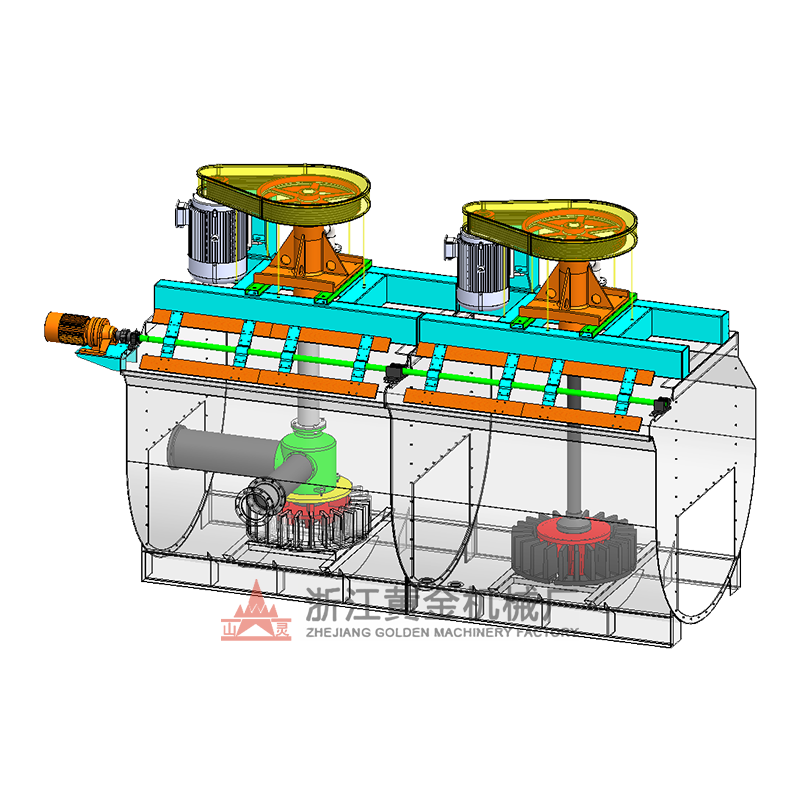 XCF/KYF Type Flotation MachineXCFII and KYFII Type Flotation Machine could have a combined configuration in which the XCFII type acts as the suction tank and the KYF II type as the direct current t...View Product →
Dewatering: turning froth into freight
Flotation concentrate leaves the cells as a froth carrying barely 25-35% solids — far too watery to load into a ship's hold. Thickeners settle the solids under gravity and return clear overflow water to the head of the plant, a loop that matters enormously in arid mining regions where every cubic metre of water is budgeted and reused. The dense underflow is then filtered or held in agitated storage tanks ahead of final dewatering. The commercial target is a transportable product: many copper and zinc concentrates ship at around 8-10% moisture, wet enough to avoid dust losses in handling, dry enough to stay within the transportable moisture limit that prevents cargo liquefaction at sea.
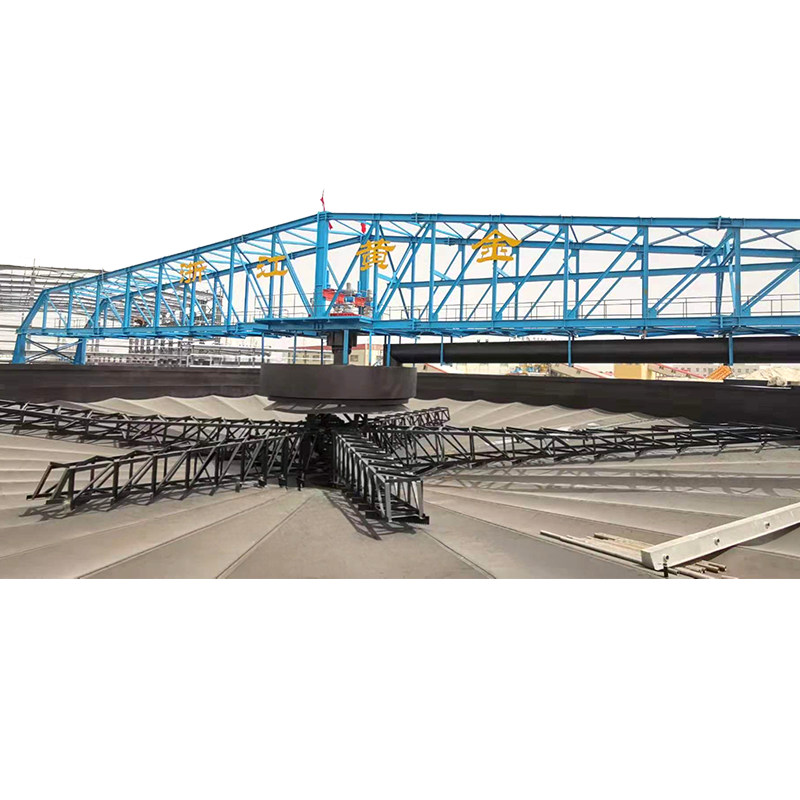 Central Driving ConcentratorThe structure of an efficient concentrator is similar to that of a central driving concentrator. Its main feature is that it adds a certain amount of flocculants in th...View Product →
What the Grade Numbers Actually Mean
Concentrate grades are not arbitrary marketing targets; they are bounded by mineralogy and shaped by what the downstream plant can economically process. A chalcopyrite concentrate cannot exceed roughly 34.6% copper even in theory, because that is the copper content of the pure mineral. Sphalerite tops out near 67% zinc. Plants therefore aim for a realistic grade window and then defend it by rejecting entrained gangue slimes and keeping penalty elements out of the froth.
| Product | Typical head grade | Typical concentrate grade | Dominant concentration method |
|---|---|---|---|
| Copper (chalcopyrite ores) | 0.3-1.0% Cu | 20-30% Cu | Froth flotation |
| Zinc (sphalerite) | 3-6% Zn | 48-56% Zn | Froth flotation |
| Lead (galena) | 1-4% Pb | 55-70% Pb | Froth flotation |
| Molybdenum | 0.05-0.2% Mo | 45-54% Mo | Flotation with Cu-Mo separation |
| Lithium (spodumene) | 1.0-1.5% Li2O | About 6% Li2O | Flotation, gravity and dense media |
| Phosphate rock | 10-25% P2O5 | 28-34% P2O5 | Flotation, washing and screening |
| Iron ore | 30-50% Fe | 62-67% Fe | Magnetic and gravity separation |
| Potash (sylvite) | 15-30% KCl | 95% KCl and above | Froth flotation and crystallization |
Grade uplift: how far concentration moves the number
Bar length shows the typical shipped concentrate grade as a share of the scale; the text shows the journey from typical head grade to shipped grade.
Grade and recovery are joined at the hip through a trade-off curve. Push the cleaner cells for two more points of grade and you usually surrender recovery, because the mechanism that rejects gangue also starts ejecting fine valuable particles. Operating a concentrator is largely the discipline of finding the point on that curve where revenue per tonne of ore — grade, times recovery, times the price formula — is highest, and then holding that point while the ore body changes beneath you. This is why a plant that looked brilliant at commissioning can drift into mediocrity without anyone touching a wrench.
Common Concentrates and Where Each One Goes
Copper concentrate is the most heavily traded of the family. Smelters buy it under terms that pay for the contained copper minus treatment and refining charges, then convert it through flash or bath smelting into blister copper and finally cathode. Because smelting capacity is concentrated in a handful of regions, a copper concentrate may travel further than almost any other mining product in regular commerce.
Lead and zinc concentrates usually leave the same mine, because galena and sphalerite grow together in the same ore bodies. Differential flotation splits them into two separate saleable streams, and the specifications are unforgiving: zinc in the lead concentrate, or lead in the zinc concentrate, is penalized heavily because each contaminates the other's smelting route.
Iron ore concentrate, upgraded by magnetic separation from banded iron formations or recovered from tailings reprocessing, feeds pelletizing plants and blast furnaces. Here the concentrate is often close to a final product rather than an intermediate, and the price reflects iron content minus impurities such as silica, phosphorus and alumina.
Lithium mineral concentrates — spodumene at about 6% Li2O, or lepidolite concentrates from mica-hosted deposits — are sold to conversion plants that roast and leach them into lithium carbonate and hydroxide. The growth of battery manufacturing has turned what was once a niche ceramic-market product into one of the fastest-moving concentrate trades of the past decade.
Potash and phosphate concentrates are the fertilizer branch. Potash operations upgrade sylvinite ore or brine-derived salts to products of 95% KCl and above; phosphate rock is upgraded to merchant grades of 28-34% P2O5 that sulfuric acid plants can attack economically. Salt-lake projects that couple brine extraction with flotation, agitation and thickening equipment sit precisely at this junction, which is why they dominate the project lists of equipment builders serving both mining and chemical processing.
The Economics: Why Mines Ship Concentrate, Not Ore
The logic is pure arithmetic. Freight, smelting and refining are all charged per tonne of material handled. Every tonne of quartz that rides along to the smelter pays a transport bill, absorbs furnace energy and leaves the plant as slag. Concentration exists so that the customer pays for metal, not for rock.
That fifty-fold reduction is why a mine can justify building an entire concentrator: the value density of the product rises to a level where haulage, port handling and shipping become affordable, and the smelter receives a feed it can melt efficiently. A furnace charged with 25% copper concentrate produces a fraction of the slag and consumes a fraction of the energy per tonne of copper compared with raw ore. Neither party's economics work on run-of-mine material — concentration is the step that converts a low-grade geological occurrence into a bankable mining project.
Payment follows the same logic. The buyer pays for contained metal at quoted market prices, deducts treatment and refining charges, applies moisture deductions so that nobody ships water as metal, and levies penalties when impurity elements breach agreed ceilings. Every one of those invoice lines traces back to a number the concentrator controls day by day.
What Buyers Specify: The Quality Parameters of a Concentrate
Before a shipment is booked, producer and buyer agree on a specification sheet. The assayed grade sets the headline value, but the remaining parameters decide whether the cargo settles smoothly or attracts deductions, demurrage and argument. Most disputes in the concentrate trade are not about whether the metal is present, but about moisture, impurities and how the samples were taken.
| Parameter | What it measures | Typical requirement | Why it matters |
|---|---|---|---|
| Contained metal grade | Assay of the valuable metal or mineral | Fixed per product, for example 25% Cu or 6% Li2O | Foundation of the price formula |
| Moisture | Free water in the shipped product | Commonly 8-10% for sulfide concentrates | Freight weight and dust control; water is never paid for |
| Penalty elements | Arsenic, antimony, bismuth, fluorine, chlorine, mercury, cadmium | Separate ceiling for each element | Smelter emissions, equipment corrosion, refining cost |
| Particle size | Fineness of the concentrate | Agreed per product and process route | Handling, filtration behaviour, roasting performance |
| Transport safety | Transportable moisture limit (TML) | Tested per IMSBC Code Group A rules | Prevents liquefaction of wet concentrate cargoes at sea |
| Sampling and assay | Representativeness of declared figures | Agreed sampling standard and umpire laboratory | Invoice differences are settled by assay, not opinion |
Two of these deserve emphasis. Moisture is the quiet variable: every unnecessary point of water is paid for twice, once in freight and once in the metal deduction it dilutes. Penalty elements, meanwhile, are geological inheritance — if the ore body carries arsenic, the flowsheet has to plan for its rejection from the very first test campaign, because no amount of clever marketing will remove it from a finished concentrate.
Where Concentrate Production Usually Goes Wrong
Quality claims, moisture disputes and disappointing recoveries rarely have exotic causes. In operating reviews, the same handful of failures keeps reappearing, and each one has a practical countermeasure.
- Under-grinding. Coarse composite particles float poorly and either drag gangue into the concentrate or push metal into tailings. The cure is honest grindability test work and the operating discipline to hold the target grind when throughput pressure builds.
- Over-grinding and slimes. Ultrafine particles reach the froth by entrainment rather than true attachment, diluting grade and slowing settling in the thickeners. De-sliming stages and correct classifier cut points limit the damage.
- Ore variability. Head grade and mineralogy drift as mining advances through the deposit, and a reagent scheme tuned last month over-doses this month. Fast assay turnaround and periodic re-testing of the reagent regime keep the circuit honest.
- Reagent control. Collector and frother dosages simultaneously set grade and recovery. Manual dosing against a drifting feed is a quiet, continuous profit leak that nobody notices on a single shift.
- Thin thickener underflow. Every point of missing underflow density is water you pay to filter, and then pay for again as freight. Underflow density belongs on the daily production report, not buried in an operating manual.
- Contamination in handling. Mixed loading, dirty containers and unlined stockpiles introduce foreign material that appears in the buyer's assay rather than yours — and the penalty clause applies all the same.
None of these failures is mysterious. All of them are caught early by routine sampling of the three streams that matter — feed, concentrate and tailings — and by treating grade and moisture as controlled parameters rather than as outcomes you discover at the port.
The Equipment Chain Behind a Clean Concentrate
Each stage of the chain maps to a specific class of machine, and the interfaces between the stages matter as much as the machines themselves. A mill that grinds to the wrong size cannot be rescued by brilliant flotation; a flotation section that produces a beautiful froth can still be undone by an undersized thickener that ships wet concentrate.
Grinding sets the foundation, and wet grid type ball mills running in closed circuit with classification remain the standard answer for the duty, precisely because a grate discharge holds a stable pulp level and a predictable product size. Between grinding and separation, conditioning and storage are handled by mixing tanks — slurry and reagent tanks in different configurations, including high-concentration and elevated designs for heavy duties. The separation stage itself lives or dies by the flotation machines: self-aspirating and forced-air cell designs each suit particular particle sizes and duties, and large cells carry the throughput on high-volume concentrators where energy per tonne decides profitability. Dewatering rests on thickening equipment, with the central driving concentrator settling dilute froth into dense, transportable underflow while returning clear water to the head of the plant.
Selecting among these machines is a design exercise with consequences measured in decades — cell volume, agitation intensity and thickener area all lock in capital and operating cost for the life of the mine. The selection principles for concentration equipment therefore deserve the same rigor as the flowsheet chemistry, and a buyer who pressure-tests dewatering capacity early usually avoids the most expensive class of retrofits later.
A Working Example: Lepidolite Lithium Concentrate
Lepidolite, a lithium-bearing mica, shows how a concentrate specification can shape an entire project. Unlike spodumene, lepidolite is fine-grained and chemically complex, so producing a consistent lithium concentrate demands tight control of grinding fineness, desliming and the flotation reagent regime — every stage of the chain described above, executed within narrow tolerances.
Our engineering team delivered a 3,000 tonne-per-day lepidolite mineral processing project in Zimbabwe, where crushing and grinding, flotation and dewatering were engineered as a single train to yield a concentrate stream destined for lithium conversion. Projects of this kind are the practical answer to the question in the title: the concentrate is not a by-product that appears at the end of the flowsheet — it is the product the entire mine exists to deliver, and every upstream decision is judged by what it does to that final grade and recovery. The 3,000 t/d Zimbabwe lepidolite mineral processing project page sets out how the equipment selection was assembled for exactly that purpose.
Frequently Asked Questions About Mineral Concentrates
Is a concentrate the same thing as refined metal?
No. Concentrate is still mineral — a sulfide, silicate or salt — with most of the waste removed but the chemical compound intact. Smelting, leaching or chemical conversion must follow before metal or battery-grade compound is produced. Concentrate is an intermediate product with a market price, not an end product.
How much ore does it take to make one tonne of concentrate?
It depends on grade and recovery. At a 0.5% copper head grade with 90% recovery, roughly 55 tonnes of ore yield one tonne of 25% concentrate. Low-grade deposits commonly pull only 1-3% of the feed mass into the concentrate stream, which is why tailings facilities are so much larger than concentrate stockpiles.
What recovery rate should a well-run plant achieve?
Most flotation plants recover 80-95% of the valuable metal, with the upper end reached on clean, coarse-grained ores and the lower end on finely disseminated or oxidized material. A single number matters less than the trend: recovery that erodes month after month is a flowsheet, reagent or grinding signal that deserves investigation.
Why is concentrate shipped wet instead of bone dry?
Dry concentrate dusts, oxidizes and loses mass in handling, so a controlled moisture of roughly 8-10% keeps the product clean and the weight honest. Too much water, however, risks liquefaction in a ship's hold — a real hazard with fine cargoes — which is why the IMSBC Code classifies mineral concentrates as Group A cargoes and requires a transportable moisture limit test before loading.
What are penalty elements, and where do they come from?
Elements such as arsenic, antimony, bismuth, fluorine, chlorine, mercury and cadmium occur naturally in some ore bodies and follow the valuable mineral into the concentrate. Downstream plants pay real money to capture or neutralize them, so specifications cap each element and deduct from the price when the cap is exceeded. The only reliable place to reject most of them is the flotation circuit itself.
Who checks the grade of a shipment — the buyer or the seller?
Both, independently. The producer samples and assays at the plant gate, the buyer samples at discharge, and an agreed umpire laboratory settles any difference beyond tolerance. Sampling procedure is specified as tightly as the grade itself, because a non-representative sample can move the invoice by more than a genuine assay difference would.
Can a concentrate ever be too high in grade?
Economically, yes. Pushing grade beyond the point where the buyer's formula pays a premium usually costs recovery — metal stranded in tailings that no premium repays. The optimum is the grade-recovery combination that maximizes revenue per tonne of ore, not the most impressive number on an assay certificate.
Planning a Concentration Circuit: What to Settle First
If you are evaluating a deposit, expanding an existing plant or rebuilding an aging concentrator, four decisions deserve to be settled before any equipment is priced: the liberation size your ore actually requires, taken from test work rather than analogy; the separation route that matches your mineralogy; the grade-recovery point your buyer's price formula actually rewards; and the dewatering target your logistics chain can live with. Every other choice in the plant exists to serve those four numbers.
We manufacture the equipment chain behind those numbers — wet grid type ball mills, flotation machines from small self-aspirating units through large forced-air cells, high-concentration mixing tanks, central driving thickeners and mechanical agitated leaching tanks — and deliver them within complete mineral processing EPC projects, from flowsheet design through installation and commissioning. Production runs under an ISO9001:2008 quality management system, supported by roughly 200 sets of production and testing equipment and an annual metal structure output above 25,000 tonnes. If you would like a second opinion on a flowsheet, a concentrate specification or a thickener sizing, our engineers are glad to review your ore data and tell you plainly what the numbers allow.



