
 EN
EN
 English
 русский
 简体中文
简体中文

Flotation is a separation technique that uses air bubbles to collect valuable mineral particles from a water-based pulp. If you ask what flotation is used for, the direct answer is that flotation is used to separate valuable minerals from waste rock, to upgrade ores before smelting and leaching, and to recover fine particles that gravity processes cannot handle. Beyond mining, the same principle is used in paper recycling, plastic separation, soil remediation and oily wastewater treatment.
The process is built on surface chemistry. Reagents make the target mineral hydrophobic, air bubbles attach to these particles, and a stable froth carries them to the surface, where they are removed as concentrate. The following sections explain the main uses of flotation, the steps inside a concentrator, the equipment and chemicals involved, and the variables that decide recovery and grade.
What Is Flotation and How Does It Work?
Flotation, sometimes called froth flotation, is a physico-chemical separation method. It converts differences in surface wettability into different rates of bubble attachment. In a flotation cell, the pulp is aerated so that the target mineral surface, which has been made hydrophobic by reagents, binds to air bubbles. The bubble-particle aggregate rises to the surface; the froth layer is scraped out, thickened and filtered to obtain the final concentrate.
Three basic conditions must be met:
- The valuable mineral must be liberated from the gangue, which comes from correct grinding.
- The target surface must be selectively hydrophobic, which comes from the collector chemistry.
- The cell must produce small and stable bubbles, which comes from the impeller and frother.
These conditions also explain why flotation is applied to so many materials: whenever a selective hydrophobicity difference can be created, a flotation process can be designed around it. For a closer look at the circuit operation, see the main principle of flotation equipment in beneficiation.
Main Uses of Flotation in Industry
The most visible use of flotation is in metal mining, but the technology is also embedded in chemical processing, recycling and environmental treatment. The table below summarises the typical feeds and objectives.
| Application field | Typical feed or material | Main objective |
|---|---|---|
| Sulphide ore flotation | Copper, lead, zinc, nickel, molybdenum ore | Produce a sulphide concentrate for smelting |
| Precious metal flotation | Gold ore, silver-bearing ore | Recover fine free gold and gold-bearing sulphides |
| Iron ore reverse flotation | Hematite, magnetite ore | Lower silica content and raise iron grade |
| Industrial mineral flotation | Phosphate rock, fluorite, graphite | Upgrade minerals for fertilizer and chemical use |
| Potash flotation | Sylvinite, salt lake brine | Separate potassium chloride from sodium chloride |
| Recycling and remediation | Waste paper, mixed plastics, contaminated soil | Remove ink, sort plastics, recover heavy metals |
| Water treatment | Industrial effluent, oily wastewater | Remove suspended solids, oil and grease |
Metal ore beneficiation
The largest share of flotation capacity is installed in base metal concentrators. Sulphide ores respond well to xanthate collectors, which is why copper, zinc, lead and nickel plants almost always use a flotation circuit after grinding. Flotation also recovers molybdenum and silver when they occur with copper sulphides, and it is used to recover gold from pyritic ores before cyanide leaching.
Hydrometallurgy and salt lake processing
In hydrometallurgical plants, flotation is used to recover metal values from slags, mattes and residues. Copper smelting slag, for instance, is ground and floated to return residual copper to the smelter. In salt lake chemistry, flotation is a standard step in potash production, helping to remove halite and clay from potassium chloride.
Recycling, remediation and water treatment
The same surface-chemistry principle also solves environmental problems. Flotation de-inks recycled paper, separates plastics with different wetting behaviour, and removes heavy-metal-bearing particles from contaminated soil and dredged sediment. In wastewater treatment, dissolved air flotation lifts oil, grease and light suspended solids out of industrial effluent. These applications are growing as pressure to recover materials from secondary resources increases.
How a Flotation Circuit Is Organised
A flotation circuit is a sequence of machines and process steps, not a single tank. The arrangement depends on the ore type and the final product specification, but several stages are always present.
- Crushing and grinding liberate the valuable mineral from the gangue.
- Conditioning mixes the pulp with collectors, frothers and pH modifiers.
- Rougher flotation collects a first concentrate from the feed pulp.
- Scavenger flotation treats the rougher tailings to recover remaining values.
- Cleaner flotation re-floats the rougher concentrate to increase grade.
- Regrinding opens locked particles and returns them to the circuit.
- Dewatering removes water from the concentrate for transport or further processing.
In a typical copper concentrator, the ore is ground to a size where 70 to 80 percent passes 74 microns before it enters the rougher bank. In a gold-bearing pyrite plant, the same circuit may be used to produce a bulk sulphide concentrate, which is then reground to expose the gold for cyanide leaching. The process steps look similar, but the reagent scheme and residence times are quite different.
Flotation Equipment and Machine Types
Flotation equipment ranges from small laboratory cells to industrial tanks with volumes above 300 cubic metres. The basic classification is by air supply method: mechanical self-aerating machines and air-inflation machines.
Self-aerating machines
Machines such as the BF type flotation machine are classified as self-aerating because the impeller draws air into the pulp as it rotates. These cells are common in medium and small plants, especially where a separate compressed-air system is not available.
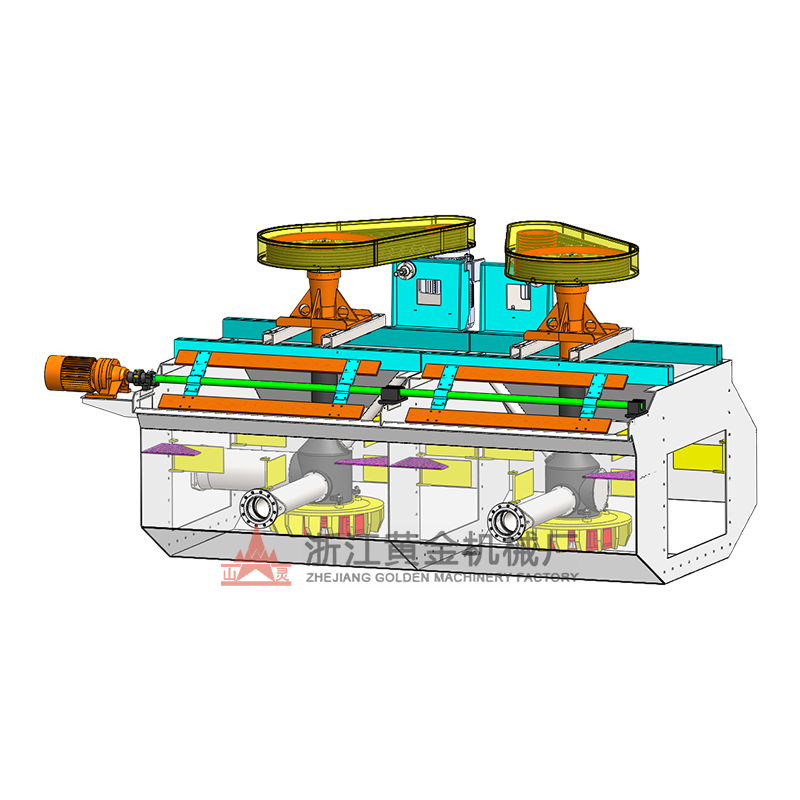 Self-Aerating BF Flotation Machine for Small and Medium PlantsA mechanical stirring cell that draws air naturally with a closed double-cone impeller, ideal for sites without compressed air. It combines suction and flotation to simplify circuit setup.View Product →
Air-inflation machines
Air-inflation cells such as the XCF and KYF types use an external air supply, giving independent control of aeration and agitation. The XCF and KYF types are often combined in one bank: one XCF cell at the head of the bank acts as a suction tank, while the rest are air-inflation cells. This removes the need for a slurry pump between flotation stages.
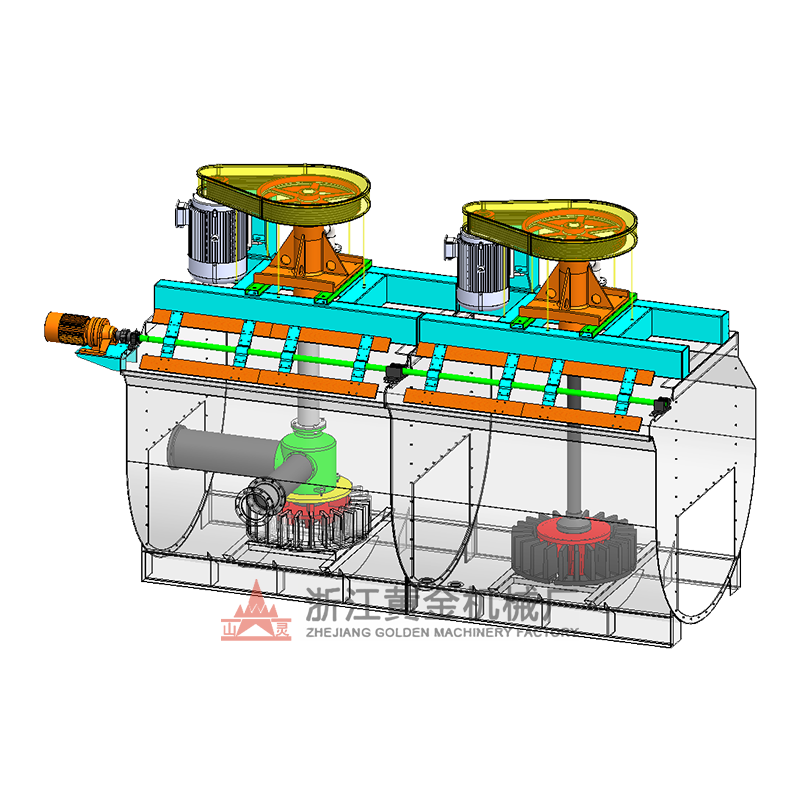 XCF/KYF Air-Inflation Flotation Machine CombinationUses external air supply for independent aeration control, and pairs an XCF suction cell with KYF direct-flow cells to eliminate slurry pumps between stages. Suitable for medium and large circuits.View Product →
Large flotation machines
Large flotation cells have changed the economics of low-grade ore processing. A single large cell can replace several smaller ones, cutting energy consumption, floor space and maintenance work. The main requirement is a stable air-dispersion system and a froth-discharge design that works at depth.
The impeller, tank depth, froth-cone design and air-control valve must match the pulp density and particle size distribution of the feed.
Flotation Reagents Used in Commercial Circuits
Reagent chemistry changes the mineral surface so that the flotation process can differentiate between particles that look similar to gravity separation. The table below lists the three main reagent types.
| Reagent class | Principal function | Industrial examples |
|---|---|---|
| Collectors | Adsorb onto the target mineral and make it hydrophobic | Xanthates, dithiophosphates, fatty acids |
| Frothers | Stabilise bubbles and form a froth layer on the pulp surface | MIBC, pine oil, polyglycol ethers |
| Regulators | Depress gangue, activate minerals, or control pulp pH | Lime, soda ash, sodium silicate, copper sulphate |
A practical reagent scheme for a copper-zinc ore starts with lime to depress pyrite, then a copper collector to float chalcopyrite while zinc is held back. After copper removal, copper sulphate is added to activate sphalerite, and a collector is dosed again to float zinc. The same cycle is repeated in cleaner stages at a lower pulp density and with a milder frother.
Factors That Affect Flotation Recovery
Many variables determine whether a flotation plant reaches its recovery target. Operators usually monitor these six.
- Particle size: coarse particles are heavy and break away from bubbles; very fine particles miss the bubble surface. A middling size range gives the best recovery.
- Pulp density: too thick a pulp reduces froth quality; too thin a pulp raises water and energy consumption.
- Reagent dosage: under-dosing leaves value in tailings; over-dosing lowers concentrate grade.
- Aeration rate: adjusts bubble surface area; too high an air rate can collapse the froth.
- pH and pulp potential: standard sulphide flotation runs in alkaline pulps to protect collector films and depress iron minerals.
- Residence time: if the pulp leaves the cells too quickly, slow-floating minerals are lost; if it stays too long, gangue is carried into the concentrate.
The chart below shows a typical relationship between particle size and flotation recovery for a sulphide ore.
Typical flotation recovery versus particle size
The exact values differ between ores, but the shape of the curve is consistent in base metal plants. If the recovery drop is on the coarse side, the plant usually increases collector dosage or froth depth. If the drop is on the fine side, the plant may need a flocculant, a stronger collector or a different cell design.
Choosing Flotation Equipment for Real Projects
Selecting the right flotation machine for a new plant or an upgrade is a stepwise process. The planned feed tonnage defines the total cell volume. The ore mineralogy defines the reagent scheme and the number of cleaning stages. The feed particle size and the required concentrate grade define the cell type and depth.
One relevant example is the flotation technical reform project at the 3,000 t/d zinc operation of Yunnan Jinding Zinc Industry. In that plant, the existing cells could not recover enough fine sphalerite, and the solution was to change the machine configuration rather than to rebuild the grinding section. The outline of this project explains how the new flotation arrangement raised recovery while keeping the concentrate grade within the smelter requirement. In high-tonnage copper and smelting plants, the same kind of analysis usually leads to large flotation machines, which reduce cell count and energy consumption.
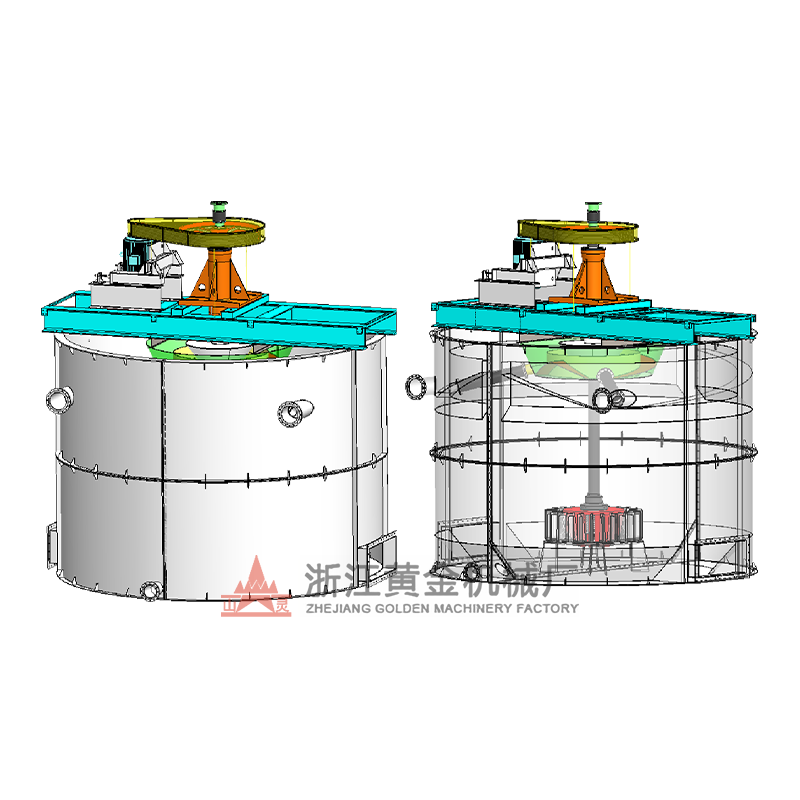 Large-Capacity Flotation Machines for High-Tonnage PlantsEngineered to handle bulky ore feeds and increase recovery while cutting energy and floor space. Offered in sizes up to 200m³, these cells suit copper, phosphate, and refractory ore operations.View Product →
For plants that process phosphate rock, potash or refractory ores, the same selection logic applies, but the froth load and the reagent stability become more important. The machine must hold the froth long enough for the cleaning stages to do their work, and the cell shape must handle the higher viscosity of some mineral pulps.
Frequently Asked Questions About Flotation
What is froth flotation used for in mining?
Froth flotation is used to separate valuable minerals from gangue after grinding. It is applied mainly to sulphide ores of copper, zinc, lead and nickel, but also to gold, molybdenum, phosphate, fluorite and potash.
Can flotation be used for non-mineral materials?
Yes. The same principle is used to de-ink recycled paper, to separate mixed plastics, and to remove heavy-metal-bearing particles from contaminated soil. In water treatment, dissolved air flotation is used to remove oil, grease and suspended solids.
What is the difference between flotation and sedimentation?
Sedimentation separates particles by density and lets material settle under gravity. Flotation separates by surface hydrophobicity and carries particles upward with air bubbles. Flotation can therefore separate particles that have nearly the same density but different surface chemistry.
What does a flotation machine actually do?
A flotation machine mixes the pulp, disperses air into small bubbles, and keeps the froth layer stable enough for collection. The impeller mechanism and tank geometry define the size range of particles the machine can handle efficiently.
Why is particle size so important in flotation?
Coarse particles are too heavy for bubbles, and fine particles do not collide with bubbles frequently enough. Each ore has an optimum size range where recovery is highest; moving outside that range lowers recovery even when the reagent recipe is correct.



